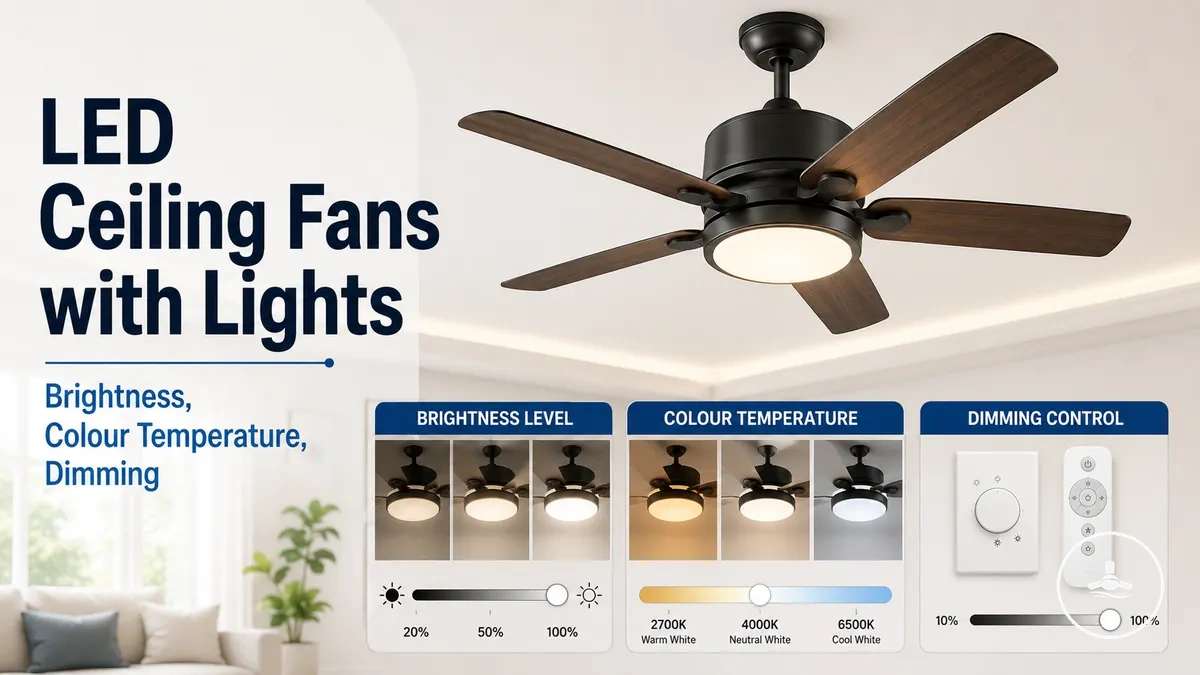
LED Ceiling Fans with Lights: Brightness, Colour Temperature and Dimming Performance
LED ceiling fan lighting is a combined illumination system inside a ceiling fan, where the LED ceiling fan light affects visibility, comfort, and room use alongside air movement. Its lighting performance is not judged by brightness alone. A useful evaluation looks at how the light output supports room suitability, how the tone feels in the room, and how much control the user has over perceived brightness. The same fixture can feel different depending on room size, wall colour, ceiling height, diffuser design, and existing ambient lighting. That is why LED lighting should be treated as a performance system rather than a single feature.
Brightness is the first measurable layer because lumen output indicates how much light the ceiling fan light can provide. Colour temperature is a separate layer because warm white and daylight tones can change ambience without necessarily changing the actual output level. Dimming control is the control layer because it adjusts perceived brightness within the limits of the LED system and its compatible control system. Users often compare these three attributes together, but they answer different questions: how much light, what tone, and how adjustable the light feels during use. Room suitability usually depends on the balance between visibility, coverage, ambience, and compatibility rather than one isolated specification.
This page evaluates LED ceiling fan lighting through those connected layers before moving into system design, lumen interpretation, colour temperature, dimming behaviour, output consistency, and common brightness limitations. The goal is to support a clearer choice without assuming that one LED ceiling fan light will suit every room condition or control setup.
LED Lighting Systems in Ceiling Fans and Integrated Light Design Basics
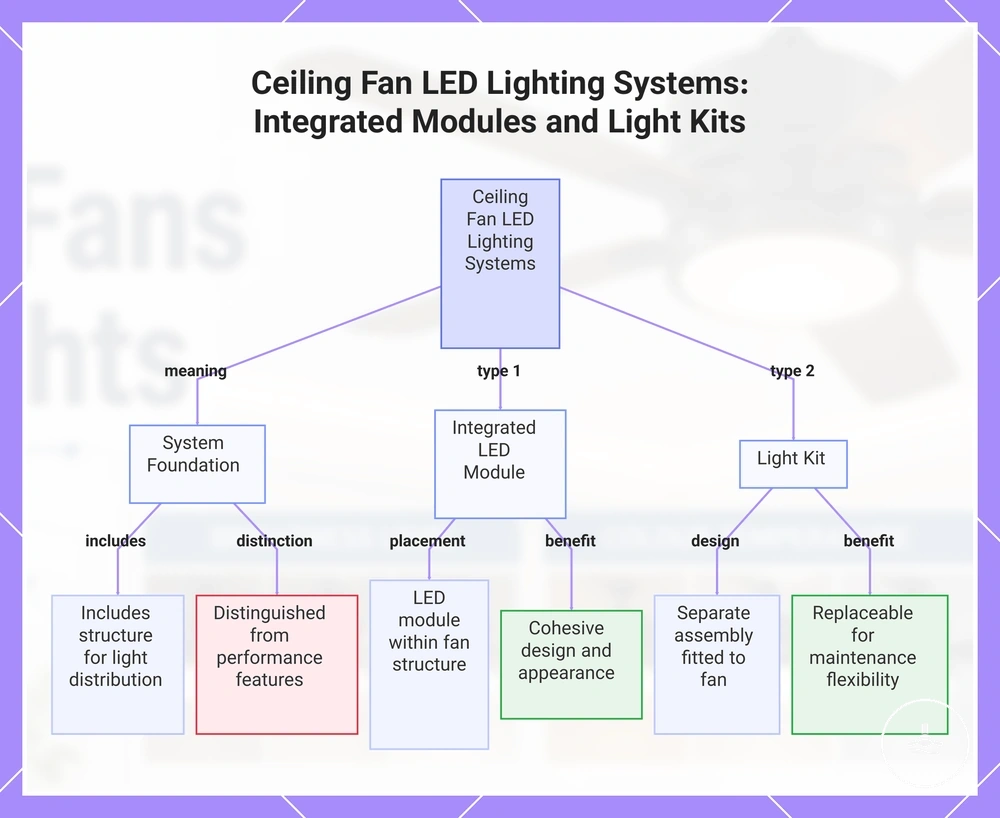
LED lighting systems in ceiling fans are lighting assemblies that combine a ceiling fan system with either an integrated LED module or a separate light kit to provide illumination. The lighting design forms part of the overall fixture system, shaping how the fan and light function together as a unified fixture. Rather than describing only the light source, the system includes the structure that supports light distribution and everyday use. Understanding this foundation helps distinguish the lighting system itself from the performance characteristics evaluated later, such as brightness, colour temperature, and dimming behaviour. This distinction also helps avoid confusion between integrated lighting and light kit configurations.
An integrated lighting design places the LED module within the ceiling fan structure to create a cohesive lighting design and consistent fixture appearance. A light kit is a separate lighting assembly fitted to a compatible ceiling fan system, offering a replaceable configuration that may provide greater flexibility for future maintenance expectations. These approaches represent different lighting system designs rather than different levels of lighting performance, so each should be understood before evaluating output or control features. For a broader explanation of ceiling fan lighting architecture, see light kits and integrated lighting explained.
This chart explains the two main LED lighting configurations for ceiling fans and the foundational distinction between the lighting system and its performance features.
Brightness Levels and Lumen Output in LED Ceiling Fan Lights for Room Coverage
Brightness in a ceiling fan light is defined by its lumen output, not by wattage. Lumens indicate the amount of visible light produced, making them the most practical measure of a fixture's brightness level and expected room coverage. A higher output level can improve visibility across a larger area, while a lower output level may be more suitable where softer illumination is preferred. Perceived brightness can still vary with ceiling height, wall colours, existing ambient lighting, and fixture design. For that reason, lumen output provides the primary basis for evaluating illumination while room conditions influence the final lighting experience.
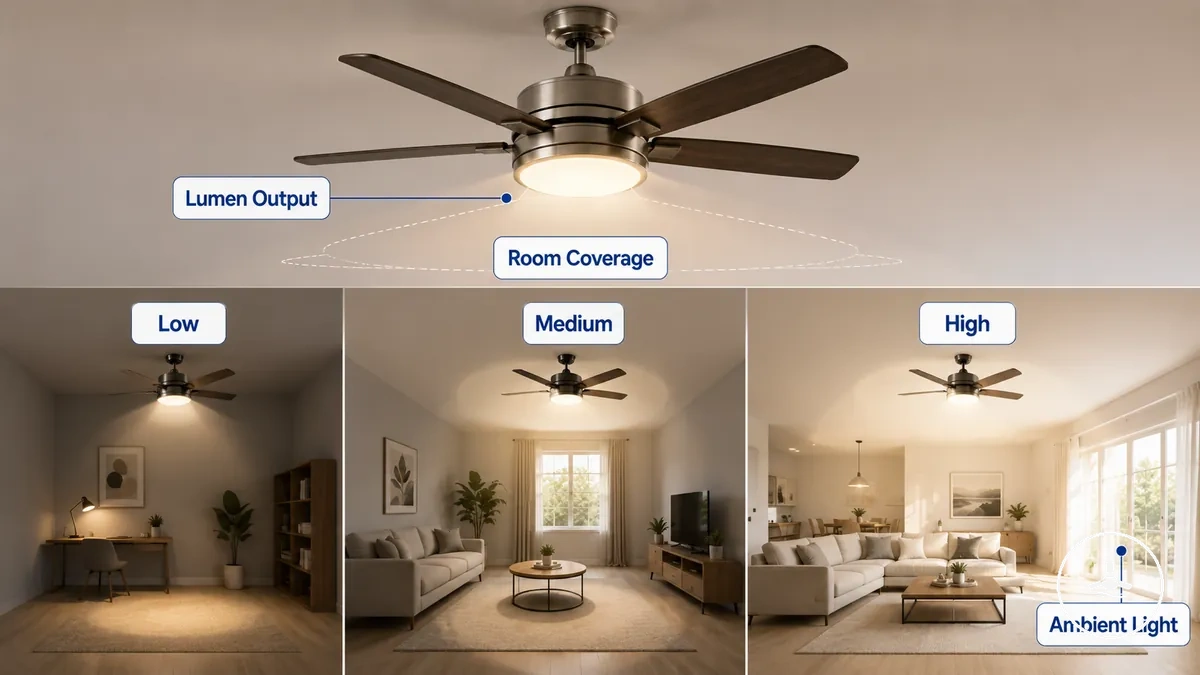
Room size and layout help determine how an illumination range is experienced in practice. Larger spaces often benefit from greater room coverage, while smaller rooms or spaces with stronger ambient lighting may not require the same light intensity. Fixture design, diffuser shape, and light spread can also influence how evenly a ceiling fan light distributes illumination. For guidance on selecting output for larger living areas, see living room brightness needs.
- Low brightness level: Lower lumen output can provide gentle illumination for spaces where modest room coverage and comfortable visibility are appropriate.
- Medium brightness level: A mid-range output level can support everyday room use when matched with room size, ceiling height, and existing ambient lighting.
- High brightness level: Higher lumen output can improve visibility across larger areas, although glare control, diffuser design, and light spread may influence how evenly the illumination is distributed.
Colour Temperature in Ceiling Fan LEDs: Warm White vs Daylight and Ambience Effects
Colour temperature describes the tonal appearance of LED light and is commonly expressed using the Kelvin scale. It indicates whether a ceiling fan light appears closer to warm white or daylight LED tones, rather than how bright the light is. A warmer tone can create a softer ambience, while a cooler daylight tone can create a clearer visual impression. Because colour temperature influences ambience and visual comfort, it should be considered separately from brightness, which depends on lumen output rather than the Kelvin value.
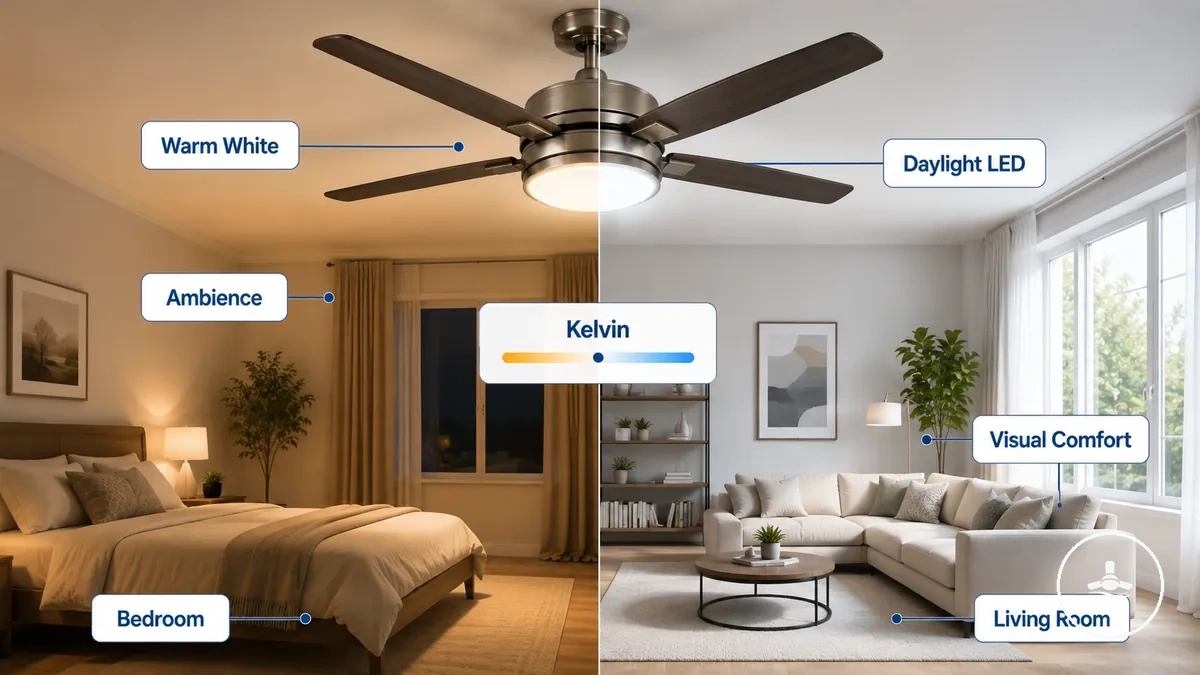
The most suitable colour temperature depends on the atmosphere you want to create and how the room is used. Warm white lighting is often associated with bedrooms and relaxation, while daylight LED tones may suit living rooms or other areas where greater visual clarity is preferred. For guidance on selecting a suitable tone for sleeping spaces, see bedroom lighting needs. Choosing between warm and cool tones changes the perceived room atmosphere without changing the ceiling fan light's illumination intensity.
| Warm White | Daylight LED |
|---|---|
| Creates a softer ambience that can support relaxation and a comfortable room atmosphere. | Creates a cooler appearance that can improve perceived clarity in many living spaces. |
| Often chosen where a calm and inviting visual environment is preferred. | Often selected where a brighter-looking tone is desired without implying greater brightness or higher lumen output. |
Dimming Behaviour in Ceiling Fan LED Lights and Perceived Brightness Control
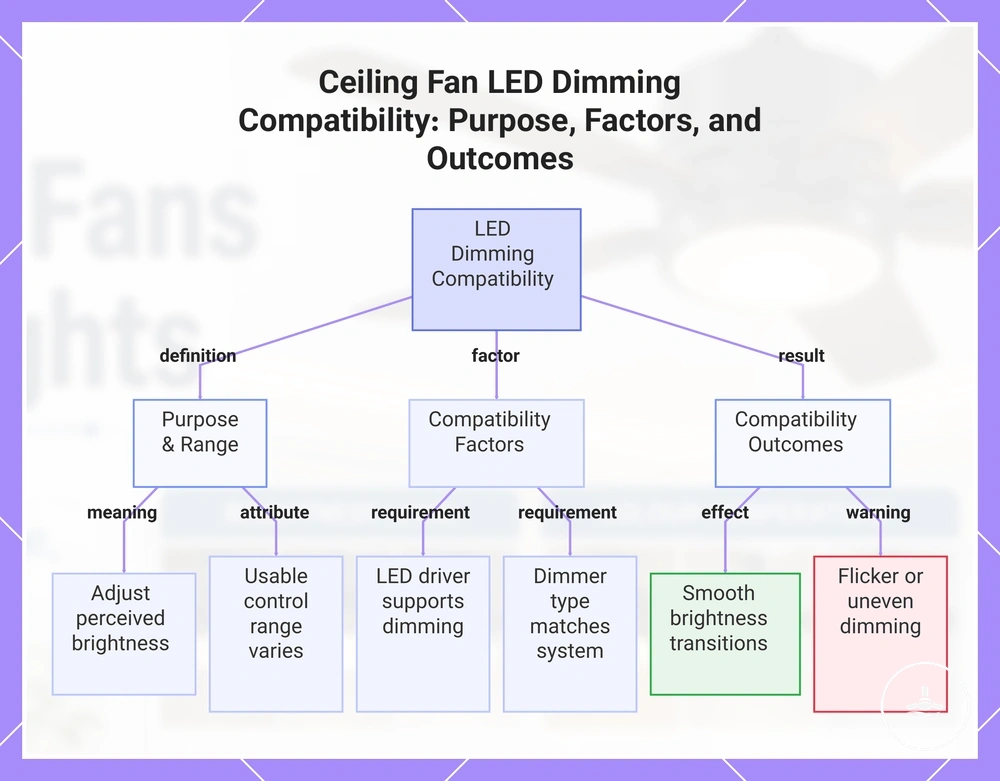
Dimming depends on the compatibility between a ceiling fan LED light, its LED driver, and the control device rather than on the light source alone. Its purpose is to adjust perceived brightness control within the operating range supported by the LED system. The available control range can vary between lighting systems, and not every LED ceiling fan light is designed to dim in the same way. When compatible components are not matched, issues such as flicker, uneven dimming, or a limited control range may occur instead of smooth brightness adjustment.
Compatibility between the LED driver and the selected dimmer, wall control, or smart control influences how consistently the lighting system responds. A compatible combination can provide smoother brightness transitions across the usable control range, while an incompatible combination may increase the likelihood of flicker or inconsistent light output. For more information about available control options, see controls for dimming and fan speed. Dimming changes perceived brightness within the supported range of the LED system but does not increase the fixture's maximum light output.
- Confirm that the LED driver supports dimming before selecting a compatible control device.
- Match the dimmer type with the LED lighting system to help reduce the likelihood of flicker or uneven brightness control.
- Expect the usable control range to vary depending on the LED driver and control compatibility.
- Wall controls and smart controls may support dimming when they are compatible with the LED driver.
- Avoid assuming that all LED ceiling fan lights provide the same dimming behaviour or compatibility.
This chart shows the definition, key compatibility factors, and outcomes of dimming behaviour in ceiling fan LED lights.
Factors Influencing LED Brightness, Efficiency and Output Consistency in Ceiling Fans
LED lighting performance in a ceiling fan can vary because it depends on the complete lighting system rather than the LED source alone. The LED driver, thermal management, optical design, and overall system integration all contribute to brightness stability, light distribution, and operating efficiency. As a result, two ceiling fan lights with a similar appearance may perform differently over time. Understanding these system-level factors provides a more accurate view of LED performance than judging the light source alone.
Long-term lighting consistency depends on how these components work together during normal operation. Effective thermal management can help maintain stable output by reducing the effects of heat-related degradation, while optical design influences how evenly light is distributed throughout a room. The LED driver also contributes to stable performance by supporting consistent light output within the system. When comparing lighting system designs, see integrated LED versus light kit to understand how different configurations may influence long-term consistency.
Key factors influencing LED lighting performance:
| Factor | Attribute | Effect | Outcome |
|---|---|---|---|
| LED driver | Power regulation | Supports stable light output | Improved brightness consistency |
| Thermal management | Heat control | Can reduce heat-related degradation | More consistent performance over time |
| Optical design | Light distribution | Shapes how illumination spreads | More even room coverage |
| System integration | Component coordination | Influences overall lighting behaviour | Balanced efficiency and output stability |
Common LED Ceiling Fan Light Issues: Not Bright Enough and Integrated LED Limitations
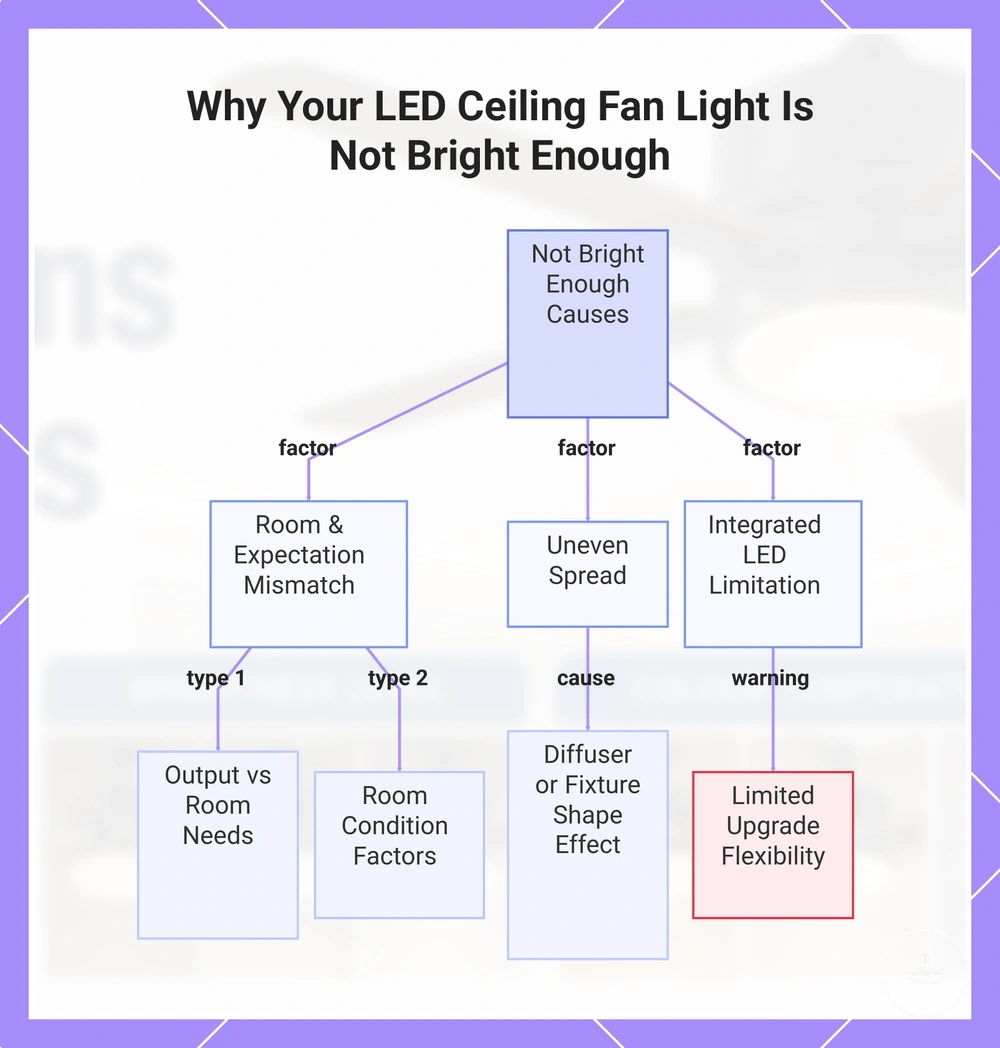
When an LED ceiling fan light is not bright enough, the brightness issue is often a perception gap rather than one universal fault. The light may have lower output than the room needs, the diffuser may soften or spread light unevenly, or the room condition may make the illumination feel weaker than expected. An integrated LED system can also create an LED limitation when the light source is built into the fixture and has limited upgrade flexibility. This means the problem should be framed around expectation mismatch, design limits, and room suitability before assuming a defect.
Common limitation categories include output, spread, and upgrade flexibility. A ceiling fan light may feel insufficient when the room needs broader coverage, when the diffuser changes how light spreads, or when integrated design limits the ability to adjust the lighting system. For broader selection context, compare these limits against the main ceiling fans with lights guide before treating every brightness issue as a repair problem.
- Expectation mismatch: The selected light output may not match the room size, surface colours, or existing ambient lighting.
- Uneven spread: A diffuser or fixture shape can soften, narrow, or scatter the visible light pattern.
- Integrated LED limitation: Built-in lighting may offer less upgrade flexibility than a replaceable light-kit configuration.
- Room condition effect: Ceiling height, wall colour, and layout can change how bright the same light feels in use.
This chart shows the common causes for an LED ceiling fan light not being bright enough, including room and expectation mismatch, uneven light spread, and integrated LED limitations.
Brightness and Performance Variability in Integrated LED Ceiling Fan Systems
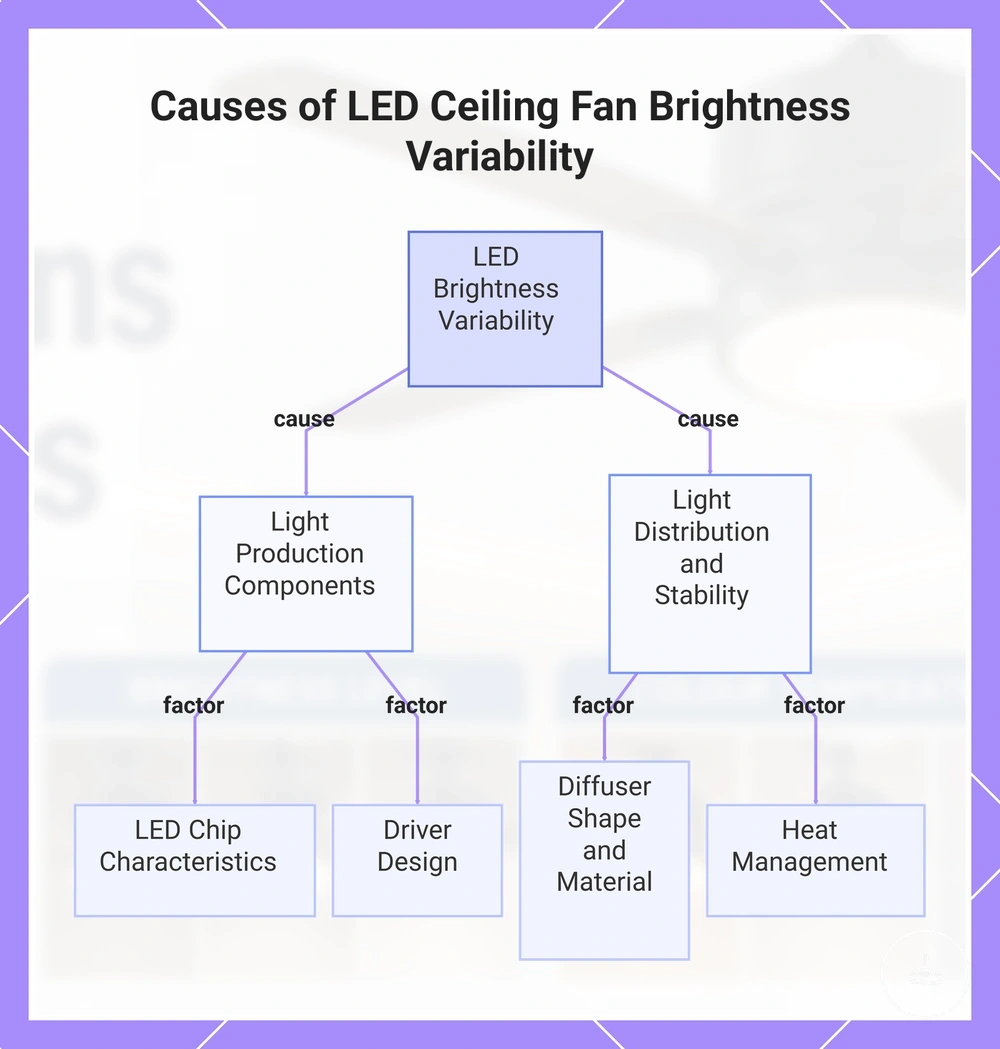
Integrated LED ceiling fan systems that look similar can still vary in brightness because light output depends on internal design rather than appearance alone. Differences in the LED chip, driver, diffuser design, and heat management can influence how light is produced, regulated, and distributed. For that reason, two similar fixtures may deliver different brightness levels or lighting consistency without indicating that either system is faulty.
Integrated LED variability is often caused by a combination of component and design differences rather than a single factor:
- LED chip: Chip characteristics may influence light output and overall lighting behaviour.
- Driver: Driver design can affect the consistency and stability of the LED system.
- Diffuser: Diffuser shape and material may change how evenly light spreads across the room.
- Heat management: Thermal design can influence long-term lighting consistency by helping control operating heat.
This chart shows the main categories of component and design differences that cause brightness variability in similar-looking integrated LED ceiling fan systems.
When LED Ceiling Fan Lights Require Replacement or Output Degradation Becomes Noticeable
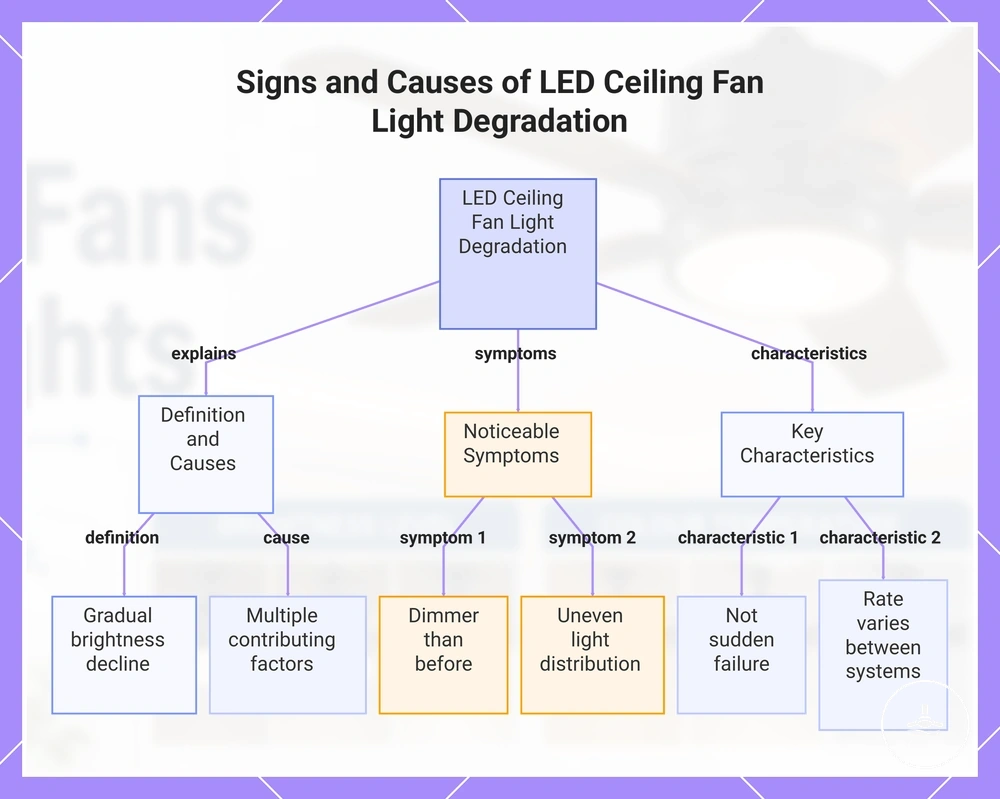
LED degradation is a gradual brightness decline that may become noticeable after extended use, continued heat exposure, or normal component aging. Rather than failing suddenly, an LED ceiling fan light can produce progressively less illumination over time, making the change easier to notice under the same room conditions. The rate of degradation can vary between lighting systems, so a gradual reduction in output does not necessarily indicate an immediate failure.
Signs that LED degradation may be becoming noticeable include:
- The light appears dimmer than it did previously in the same room.
- Brightness decline becomes more apparent during normal everyday use.
- Light distribution appears less even across the illuminated area.
- Output consistency may change after extended operation or prolonged heat exposure.
- The overall illumination no longer provides the same visual coverage as before, even though the fixture continues to operate.
This chart explains what LED ceiling fan light degradation is, its common causes, the noticeable symptoms of output decline, and key characteristics such as its gradual nature and variable rate.